Showing posts with label management. Show all posts

Take Steps to Reduce Bias in Performance Reviews


A recent study by HR.com revealed that two-thirds of organizations don’t think that their performance management system is effective. This may be because (as research from Stanford suggests) most people view performance reviews as “subjective and highly ambiguous”.
Ideally, the purpose of any review process should be to improve employee performance and drive better business results. However, this intention is often negated because many employees believe that their evaluations are unfair. And these beliefs may be more valid than most of us would be comfortable admitting; even though it may unconscious, bias is very real in performance discussions and takes a number of forms including, but not limited to:
  • Recency bias: Judging people primarily on their most recent achievements or failures  (businesses that perform annual reviews are particularly vulnerable to this.)
  • Halo effect: When someone excels at one aspect of their job, a manager may overlook negative factors that would be an issue for any other employee.
  • Gender bias: According to a recent study women are 1.4 times more likely to receive critical subjective feedback in performance evaluations than men.

To reduce bias in reviews and drive better performance for everyone at your business, you need a consistent structure and clear objectives. Here are four simple ways to do that.

1. Write down goals and expectations

A study from MIT shows that the best performing teams usually have clear and ambitious goals. This is hardly a mind-blowing insight, so the real surprise is that 50 percent of employees don’t know what’s expected of them.
Setting clear targets is an obvious way of evaluating performance and developmental needs. It also reduces bias. Referring to goals before completing evaluations gives managers a more objective perspective than open-ended questions like, “how did this person perform?”.
Reviewing performance against goals more often allows you to track progress more effectively while reducing the impact of recency bias. Managers are much more likely to recall how an individual performed over the past month or quarter than for an entire 12 months.

2. Align individual and business goals

Companies with a purpose outperform the market by 42 percent. Not only does a mission guide the direction of your business, it motivates employees by connecting their day-to-day tasks and goals to broader business outcomes. Yet one study found that less than one-quarter of middle managers knew their company’s strategic priorities.
When business goals are clear and transparent, employees can directly connect their goals to specific company targets. The ability to see real business impact will reduce bias in reviews. When priorities change, individual goals should be updated as well, so that you’re not unfairly judging people against outdated targets.
Aligning individual and business goals also help to reduce gender bias. Women are less likely to receive feedback that’s specifically tied to business outcomes than men, which may explain why they only occupy 24 percent of senior roles. The more women are evaluated on their broader business value, the more they will feel like and look like the future leaders of your company.

3.  Avoid the open box

Much of the unconscious bias in performance reviews stems from the “open box”. Many review processes lack structure and simply provide managers with a few open-ended questions and a large blank space to fill. With so little guidance and so much leeway, it’s no surprise that certain biases find their way into evaluations.
The open box is a symbol of how little guidance managers get in general. Just 39 percent of new managers received training for their role and nowhere is this more apparent in the performance management process. In a McKinsey survey, less than 30 percent of employees said that their managers are good coaches.
To help managers improve, train them to collaborate with their team on setting and aligning goals and on providing constructive feedback that’s development-focused. Encourage more frequent conversations to reduce recency bias and provide technology that prompts them to check in with their team and what to discuss. The more guidance and structure you provide, the less likely you’ll see their open-box biases.

4.  Use analytics to spot potential bias

HR professionals are often uncomfortable using data to inform decision-making. But when it comes to the very human problem of bias, analytics is useful, especially as an accusation of prejudice can itself be accused of bias if you don’t have evidence to back it up.
It can be easy to spot potential bias from the data, like when an employee receives a negative evaluation but you can see that they hit all their targets and directly contributed to the broader business goals. Or if the data shows that a manager didn’t have regular performance-related check-ins with an individual, be on the lookout for recency bias in the review.
Treat these insights as opportunities for identifying which managers need additional coaching and ensuring employees know to speak up if they feel the review process is unfair.
Objectivity = Better Performance
Labor costs can account for as much as 70% of total business costs, and employees play an essential role in productivity. You need to maximize every opportunity you have to improve performance.
60 percent of people who believed that their company’s performance management process was fair also said it was effective. By reducing bias in your reviews and helping managers have a genuine impact on the development of their team, you’ll boost performance and drive growth for your business.
This content was originally published at HR Technologist

A Leader's Role on a Dysfunctional Team = Responsible


We’re all familiar with what Tolstoy’s posited in Anna Karenina, that “happy families are all alike and every unhappy family is unhappy in its own way.” And while the particulars of what makes each family unhappy are different, the source of the dysfunction always stems from the behaviors and attitudes of the parents/adults in the home. It is the moods, habits and behaviors of one (or more) adult(s) which catalyze and inform how the others in the family behave, act and react with the catalyst and with each other. It is the combination of the adult’s catalyst behaviors and the resulting reactive behaviors which create each unique unhappy family situation.

The origin of team dysfunction is always the leader
This analogy also applies to teams at work. Namely, that happy, productive teams are all alike and every unhappy team is unhappy in its own way; with Forbes’ Coaches Council identifying 14 different ways a leader might diagnose dysfunction on her own team. And, like the adult in the home being the catalyst in the unhappy family analogy, dysfunctional team behaviors are in reaction to the habits, attitudes and behaviors of the leader.
Of course, unlike children, every adult in the workplace is responsible for his own behavior, but Shawn Casemore, author of Operational Empowerment may have said it best on his blog on this topic: “The origin of dysfunction in an organization is always the same. It’s the leader of the team.”
If you’re leading what you fear is a dysfunctional team, use these tips to course correct your own thinking and behaviors to get your team back on track.
Team dysfunction is never one person’s “fault”
A less seasoned leader will focus his attention on one person who appears to be “the problem” because that looks like the easiest way forward. Skilled leaders, on the other hand, resist the urge to ambush any one member because they understand no one is coming to work with the intent to upset the boss and foil her plans. Rather, every person’s behavior on the team is influenced both positively and negatively by the leader’s own attitudes, moods and behaviors.
Withdrawal is one of the behaviors which may be called out as a problem, but is, in fact, a reaction to the wider dysfunction.  Blaming or scapegoating an individual on the team won’t “cure” the team’s dysfunction, because the behavior is a symptom, not the cause of it. In fact, it’s the whole team which needs a tune-up, including the leader.
Your behavior creates fear
As a leader, if your team members generally defer to you, I’m sorry to say that it’s not because you’re ever so wise, charismatic and smart. On the contrary, if this is happening, you are surrounded with yes-men because your behaviors create fear.
Google’s Project Aristotle research demonstrated that trust and safety are necessary for high performing teams. Team members need to feel “psychologically safe” both with you as their leader and with their team mates.
At work, people’s fears fall into 3 main categories: being misunderstood (their motives or credibility questioned), being excluded (ostracized for not conforming) and being invisible (not heard). All of these fears are inextricably tied to our core feelings of value and sense of worth and if your team is spending the majority of their days outside their psychologically safe zone, then it is draining their creative energy and productivity -- and likely leading to dysfunctional behaviors.
Strong leaders learn how to manage conflict in ways that maintain psychological safety of the people on the team, in order to have the needed conversations necessary to productive growth. Unfortunately, too many conflict-avoidant leaders fall into the next trap...the sidebar conversation.
Sidebar conversations are a sign of dysfunction
Sidebar conversations are those hush-hush tete-a-tete’s among sub groups of team members (with or without the leader) which purposefully exclude other relevant members and are akin to gossip and just as dysfunctional. And when these sidebars are driven by the leader, you’re normalizing scapegoating and instilling fear - because if you’re comfortable with sidebar conversations with one team member about another team member, you might be doing the same to them.
This is also evidence of a dysfunctional hub and spoke management style. This approach of being the primary means of keeping activities synchronized, it actively discourages the team from engaging with their team members on topics outside their direct responsibilities. They forgo sharing their insights and thoughts of strategic relevance because of a politeness ritual inherent in the hub and spoke setup.
You don’t communicate as well as you think you do
You think you’re communicating effectively, but the evidence clear shows that everyone overestimates their ability to communicate. As a team leader, you need to take this insight to heart and endeavor to understand how each of your team members thinks and feels so you can best tailor your communication style to what suits them. This small effort to adapt on your part will help build strong relationships and enhance trust. Maya Angelou said it best: “People will forget what you said and did, but they will never forget how you made them feel.”

Next time you find yourself wondering what to do about the dysfunctional behavior on your team, take a step back and explore how your attitudes and behaviors are contributing to what you’re seeing. Your team will not begin to work better together until you also look at your role in it.

Empathy in the Workplace - What Does it Look Like?


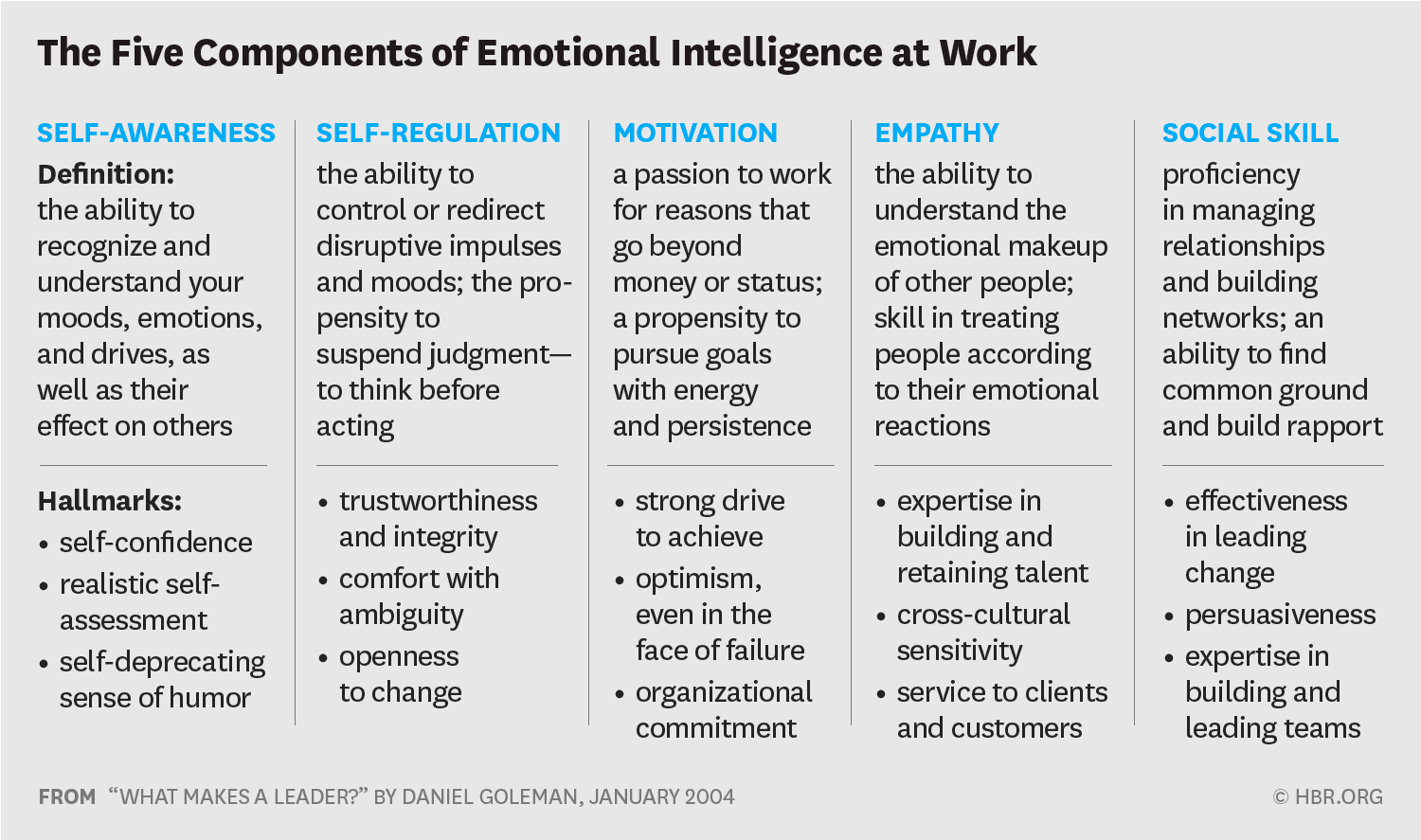
Over the years there's been a lot written about the need for leaders to have a high EQ  or emotional intelligence quotient. Harvard Business Review’s, “What Makes a Leader” outlines the 5 components of EQ at work as self-awareness, self-regulation, motivation, social skills and empathy.

EQ becomes more critical as your responsibilities expand beyond an individual contributor. Your work becomes the activities and tasks that motivate and influence the people who directly report to you and the wide map of stakeholders across and above you in the organization. Your work becomes far more about people and relationships than the black and white execution of any one work output.

In my experience, out of all of the EQ components, empathy tends to be the most misunderstood and, therefore, underutilized component. That is too bad, because empathy is the most easily coached and it’s easier to model empathetic behavior compared with developing the other components.

What does empathy look like in the workplace?
Empathy is defined as accurately perceiving and understanding another person’s emotional state and responding accordingly. Sometimes, people view empathy as primarily relating to understanding when people feel sad (closer to sympathy). When, in fact, empathy involves the whole range of emotions. And remember, people do have the whole range of feelings at work. Understanding that someone may be feeling angry, vulnerable, proud, protective, nervous, happy etc can be invaluable to you as you consider how to best communicate with them.

Just taking a moment to consider, “if I were so-and-so, how might this make me feel? Has this happened to me? How did I feel? why? Has this happened to someone I know, love or respect? how did they feel?” helps to build empathy and can create a better outcome.

In my article on demonstrating empathy when leading through an organizational change, I shared the many different feelings teams may feel when they hear the news about a change,

...people would likely feel surprised and potentially confused. They may feel nervous about being asked to transition away from the work they know into new activities with new bosses. They may feel angry about an organizational change happening “to” them outside of their control. They may feel disappointed about having to transition projects they enjoyed and pick up ones they don’t feel as enthusiastic about. They may feel all of these things at once or none of them at all…

Any reasonably self aware leader can recall being a similar situation themselves earlier in their career (maybe even that day!). By taking a quick inventory of the potential emotional states the other person/people may be in, s/he is better prepared going into the conversation and more likely to come out with a better long term result.

Taking a moment to consider how another person may be feeling - demonstrating empathy -  is beneficial even when the situation isn’t as obviously fraught like an organizational change. In status meetings where there are inter-dependent teams there will be times conflict will erupt seemingly out of nowhere. If the leader has considered how the different parties may be feeling he can actively bring that to the discussion and model what empathy looks like for group. For instance, 

Sally, you’re obviously frustrated that the commit is delayed and this is the first you’re hearing about it. Richard, would you please fill Sally in around why that was in the best interest of the project overall as she may not be aware yet of what changed in Design just yesterday.” 

A comment from the leader like this validates how Sally is feeling and reminds her to consider Richard's situation. It also coaches Richard to proactively think about how his stakeholders may react to updates and think through how to best communicate them.

Empathy is coachable
In any communication it’s not about what you want to say, it’s about what the other person needs to hear. Having empathy for the other person helps you to best communicate, motivate and influence. Empathy involves just a moment of prep actively considering the other person’s situation and how they may feel. This is a behavior that can be taught and practiced as a means to improve a promising leader’s EQ.

Becoming strategic

When I talk with young professionals early in their careers, I regularly hear a frustration along the lines of “I don’t want to just execute anymore, I want to be strategic”. 
When I mentor, I meet more than a few talented, intelligent people who are passed over for promotion because they aren’t (yet) perceived as “being strategic”.
We all want a seat at the table. It feels good to be asked to help set the course for our teams and companies to be successful. To get there, it’s necessary to build your strategy setting and communication skills in order to earn that seat. Here are a few things to think about if you want to become or be perceived as strategic:
Banish the idea that any role is “just” execution or “just” strategy
Rarely does a strategy come down from “on high” like Moses with the Ten Commandments (or McKinsey consultants with binders) to be summarily handed off for execution.  The best ideas without execution are worthless, and a strategy’s success lies in the quality of every person's day-to-day execution and decision making over a long period of time.
This quality requires a level of understanding and buy-in that doesn’t come from a one-time presentation or strategy document hand off. The best leaders know this and is why they work continuously to ensure that everyone understands how their efforts and insights supports the organization's larger strategic goals. It is infused into every one of their 1:1's, every performance review with a team member, every new idea brainstorm with a cross-functional team and likely, even worked into every casual hallway conversation.
Today, you can “be strategic” in the role you have
A key way you can be strategic in the role you have is to actively help to translate your organization's “big” strategic ideas into the day to day activities of you and your colleagues. Even when you are not the team lead, your interactions and conversations can authentically reflect this understanding and it will help keep people appropriately aligned -- and your boss will definitely appreciate that.
As HBR suggests in “Strengthen Your Strategic Thinking Muscles”, thinking strategically is about creating connections between ideas, plans and people that others fail to see. This points to you beginning today to proactively build relationships with all of your different stakeholders - both internally among the different departments you work with and externally among customers and vendors. 

If you learn what is important to your stakeholders and you understand what is important to your team and organization, you are setting yourself up to be in the right place to identify and create those important connections and deliver valuable strategic insights.


Have (and share) a point of view beyond your span of control
Being viewed as strategic means you will need to demonstrate a broader understanding of the organization beyond “just” your role. It's not enough to know your own job backwards and forwards, you need a mindset that is both long term and systematic. Long term meaning you think about the implications of decisions beyond the current quarter or fiscal year, and systematic meaning you think about the implications of decisions on your extended stakeholder network.

Thinking strategically isn't enough. You need to have the confidence to find and take advantage of appropriate opportunities to demonstrate your understanding and insights. It can be as simple as speaking up in a staff meeting to build on a colleague’s point or making an important introduction to help a colleague’s project.


Don’t forget your soft skills
Soft skills like executive presence can make or break a career. Learning to effectively manage stress is important for the rising executive because it demonstrates your ability to deal with change and your calm demeanor instills confidence in those around you. 
Mindfulness is also a necessary skill for today's strategic thinker because learning to be fully present helps improve your cognitive and communication skills. Whether you exercise, do yoga, cook or meditate -- prioritize the time for these activities so you are strong and resilient and fully able to handle the inevitable stress that comes your way.

Why I Choose to Coach and Mentor

For longer than I care to admit sometimes (20+ years), I have been working full time. I was lucky and I was given the opportunity to manage teams early on in my career. And this early start to management allowed me to gain needed experience and build a proficiency that comes from 10,000 hours of practice.

And, for me, one of the most rewarding parts of management is mentoring and coaching. I enjoy the process of helping people to clarify their goals, understand their strengths, take on new challenges and successfully build needed skills and capabilities. It is really gratifying to help someone grow and see them meet (and crush!) their career goals.

Harvard Business Review recently that Millennials value mentoring highly. These young professionals are ambitious and crave the feedback that will help them succeed. Especially useful and valuable is “micro feedback” - where a mentor’s input and feedback is provided regularly and not just at official performance review times. This kind of real-time input can be the most effective because of increased relevancy and specificity of the feedback.

HBR also suggests Millennials value micro-mentoring versus a broader, more encompassing 1:1 mentoring engagement. Much like micro and real-time feedback, micro-mentoring provides the protege needed help around a particular challenge over a given timeframe with the best mentor for that situation. This approach also allows young professionals to craft a kind-of career ‘board of directors’ with different skills, expertise and networks which are open to helping them at different times across a long career.

In addition to mentoring the people I am fortunate to work closely with, I also choose to mentor with Everwise. Everwise engages with companies with rising leaders (proteges) and connects them with mentors who work outside the protege’s company.

And while I’m not knocking internal mentorship programs, it’s been my experience that there is something special that can happen when a protege feels she can talk freely and openly about her professional goals and struggles with a mentor who has no ties with her organization. She knows I am 100% in her corner and that my advice and feedback is not at all biased by any internal politics or other agendas.

It is also helpful for them to see that the challenges they are personally facing are, in fact, very common ones faced by many women in most organizations, and that it’s not something unique to them. This insight and understanding can open them up to finding new ways to break out of old patterns and to trying new approaches that can be more successful.

As a protege, if you need another reason to look outside your own organization for a mentor, Gallup research shows us that just 1 in 10 people have the innate talent to be a “good” manager where a good one takes the time to get to know their team’s strengths and actively works on their development. This situation puts too many up and coming “good ones” at risk of being neglected, under-developed or even burnt out by “limited” managers.

Finally, if you’re one of the “good” ones, or just think you have some key experience and may have something to offer, you should consider seeking out mentoring opportunities beyond just your immediate team. Be open to it and connect with someone and work together to help them succeed. I expect it will be a positive experience for both of you.

Wellness, Mindfulness and Your Professional Success


Wellness and mindfulness are terms that have moved out of the realm of "woo woo" into the very real world of business. And, well, from my point of view it's about time.

The demands on today's professional to be "always on" and available, to stay on top of whatever is the newest and latest while successfully leading and motivating a diverse and cross-functional team of other professionals is a recipe for stress and burnout. Add a significant other, aging parents and a child or two to this mix and it's no wonder stress is the #1 lifestyle issue impacting the workplace today.

It's not a luxury; our own self-care is a necessity to your being effective and productive at work. Over the past few months I've written a few posts related to wellness at work on LinkedIn, Business2Community and the Grokker blog that I wanted to summarize here.

3 reasons why today's leaders need mindfulness meditation
Meditation changes your brain for the better, allowing you to develop and hone the skills that make you a more effective leader.

Why every leader should make a mindfulness resolution (hint: it's for your team)
What you may not realize is that your stress is contagious - and your team is catching it! They want you to proactively address and manage your stress so you don't add to theirs.

Give your team what they want: wellness
That on-site fitness center is a good start, but doesn't meet the needs of most of your employees. They want to be able to work out when and where it is convenient for them -- and that means you also need an at home workout option.

Stress is the #1 problem in the workplace
While 86% of employers offer EAPs (employee assistance programs) as a solution for stressed employees, just 5% of employees utilize this benefit. Why? Because employees don't want referrals to counselors for their stress, they want help managing it through exercise, yoga and meditation.

Should employers require regular exercise?
The physical and mental benefits of regular exercise are abundantly clear and it has a direct impact on the engagement and productivity of the individuals. You owe it to yourself and your career to exercise regularly, and leaders owe it to their teams to offer access to the exercise options that can fit into their busy lifestyles.

What are soft skills anyway?

“Soft skills get little respect, but will make or break your career.”  - Peggy Klaus, “The Hard Truth About Soft Skills

Many, if not most, professionals are smart. Countless people have the education, experience and brainpower to identify and find solutions to today’s pressing business problems. And yet, they don’t all move up the corporate ladder. We all know, at some level, that it’s not solely about being smart or performing well technically that opens up executive office doors. It is the elusive “soft skills” which play a critical part.

Soft skills are hard to name and define; and thus difficult to develop.  You need to have a clear sense of what the skills are, and then you can more easily ask for feedback and measure progress. A Harvard Business Review blog cited the Center for Talent Innovation’s study that says the most important soft skill is executive presence.

3 key elements within executive presence
Executive presence connotes that others, especially existing leaders in the organization, perceive you as “leadership material”. Some young women I have mentored have heard “you lack executive presence” as a key reason why they did not get the desired promotion or growth opportunity, but they don’t get precise feedback. Here are the top 3 elements from the study:

Gravitas
67% of the executives surveyed agreed this was a core characteristic. Gravitas comes from the Roman virtues, and connotes dignity, importance with a certain substance or depth of personality. To me, it’s about confidence and credibility; it answers the question, will people feel “safe” following you.

Communications
Your verbal communications are how you demonstrate your gravitas. It is your ability to “command a room”. It is not only in formal presentations, but even in meetings with your peers. Do you listen actively? Do you ask the right questions? Are you able to relevantly add to discussions in areas outside your sphere of responsibility?

Appearance
While not the top factor, it is clear to see how appearance could negatively impact both communications and gravitas. It’s the reason why the tried and true advice is to “dress for the job you want”. Yes, it’s true that you can’t judge a book by its cover. But it’s also true that, like it or not, your appearance will contribute to others’ perception of your gravitas and to your ability to command a room.


How to develop executive presence in your team
Personally, I never had the “executive presence” discussion with any one of my managers. It was just not talked about or named. Coming up, it seems you either had “it” or you learned “it” through osmosis. And, well, that’s just not scalable.

I’ve found that the most important thing you can do to increase your team’s executive presence is to talk about it with them. Underwhelming advice? Maybe, but truly it is that easy. Just begin talking about executive presence as a factor in how individual performance will be evaluated relative to earning promotions.

I endeavor to talk about it with every person I am fortunate to have on my team. I don’t make it a single discussion or like the awkward “talk” you have with your mom or dad at 13. I just work it into day-to-day work, 1:1’s and quarterly goal setting and performance reviews. Just talking about it increases each person’s self-awareness around how they present themselves and are perceived by others. And it provides a common vocabulary for asking for and providing feedback for improvement in this area. And it requires nothing more innovative than a conversation.


How do you think about executive presence? How are you developing your team?

Building a Superstar team


"A" players hire "A" players
You may have heard this quote attributed to Steve Jobs, “‘A’ players hire ‘A’ players; ‘B’ players hire ‘C’ players”
In my career, I’ve found it to be consistently true. And, I’ve learned that it’s also rarely that simple.
Team makeup impacts everyone's performance
Any one person’s performance is, to some degree dependent on team composition: the diversity of skills, relevant experience, role clarity, work style preferences and personalities involved. And this means are times that “A” players find themselves within team dynamics that constrain them to performing at a “B” or “C” level. And this is frustrating to everyone involved
One way this can happen is if team leaders approach hiring as simply filling a role versus building a high performing team.
Superstars can lift everyone’s performance
Of course there are times when hiring superstar performers lift the productivity of the team. However, this rarely happens by accident. It requires active, engaged leadership (with help from their HR partner) to identify and articulate what the “right” A player would need to bring to the team.
Lou Adler shared his hiring philosophy that there are four kinds of work types: Thinkers, Builders, Improvers and Producers. And that while each type is necessary at all stages in a company’s life cycle, the balance shifts over time.  With companies needing more Thinkers and Builders at the outset and more Improvers and Producers as it matures.
Identify the hill to take or to take the hill?
Adler’s article reminded me of an interview early in my career where a startup CEO asked me, “do you prefer a) to be the one to identify the hill to take? or b) to be the one to take the hill?
At the time, I fumbled through my response because I thought it was a trick question. With time and experience on the other side of the hiring desk, I see it now for what it was. A genuine way of trying to get to know me in an interview setting.  
There isn’t a “right” answer to his question and my picking a) didn’t mean I couldn’t execute, nor did picking b) mean I wasn’t strategic. It’s simply an effective question designed to help him learn who I was, how I work and where I find my flow. This is critical information needed when assessing who to bring onto a team.
Team member diversity
Having different kinds of people on a team make it a stronger team. And that’s not just some management platitude, Harvard Business Review cited a study which confirmed when teams are diverse, more meaningful innovation occurs.
But successfully managing a diverse team can be harder on its leader. There is greater need for role clarity, communications and successful mediation of inevitable conflict. And I suspect this is may be why some managers struggle with the act of team planning and opt to forgo team diversity for homogeneity.

And by the way, if you’re interested, I prefer to “take the hill” :)

Related links:
Good leaders get out of their own heads


What's our Plan B?

“I love this idea! what’s our Plan B?”
Anyone who has worked with me has heard me use this phrase. I say it often. It only takes a few meetings to learn that having a Plan B is necessary in order to get an idea green lit, funded and resourced.
Don't get me wrong, I'm no "Debbie Downer". It's just that no matter how confident we are in the success of a program at the start, there is always the chance of execution error, miscalculations or just run-of-the-mill, unexplainable, under-performance. And it’s better to be cognizant of this potential at the start.
Projects are about engaging with risk, not avoiding them
An Econsultancy blog around recognizing the risk in project management says this:
Projects are about engaging with risks, not avoiding them. We engage with risk in order to achieve commensurate rewards. If we can eliminate all risks, then the project is probably trivial, the rewards inconsequential. Most of us want to work on projects that make a difference. So we have to deal with risk.
It goes on to confirm that the best time to think about risk is at the outset of the project. And to ensure the team is aware of the signs so that issues can be dealt with as they occur, not when too many of the dominoes have fallen.
2 more benefits of establishing a Plan B
In my experience there are additional benefits to teams who clarify their Plan B up front.
1. Clarity and transparency around the metrics
I’ve written about the many benefits of getting everyone singing off the same metric song sheet and it applies here too. The program team needs to be on the same page around the metrics that will trigger the decision to move to the established Plan B.
2. Fosters a risk tolerant culture
I want team members to bring me their move-the-needle ideas. And I want them feeling good about what the business learns from every test. Establishing a Plan B as part of their original idea removes much of the destructive “blame game” dynamics that could potentially come into play. 
Because the Plan B is part of the team's original idea, if/when a Plan B needs to be implemented, the program itself isn't a failure. And the focus can be on gaining learnings that can later be rolled into the next idea.
Planning for Plan B
Business-moving ideas will always involve some risk. Proactively planning a Plan B helps mitigate that risk. There is less hesitancy in calling issues out and putting the already-agreed-upon alternative plan into action. And it keeps the focus on learnings for the business vs. an innovation-crushing blame game or witch hunt.  

Happily, I have been fortunate to work in online businesses where technologies like A/B testing, content management systems (CMS) and marketing automation tools allow programs to be easily monitored and quickly adjusted to Plan B when it’s been needed.  

Tell me what you have learned about managing risk while fostering a risk tolerant culture?